NVIDIA debuts BioNeMo Agent Toolkit and pushes humanoid robot safety
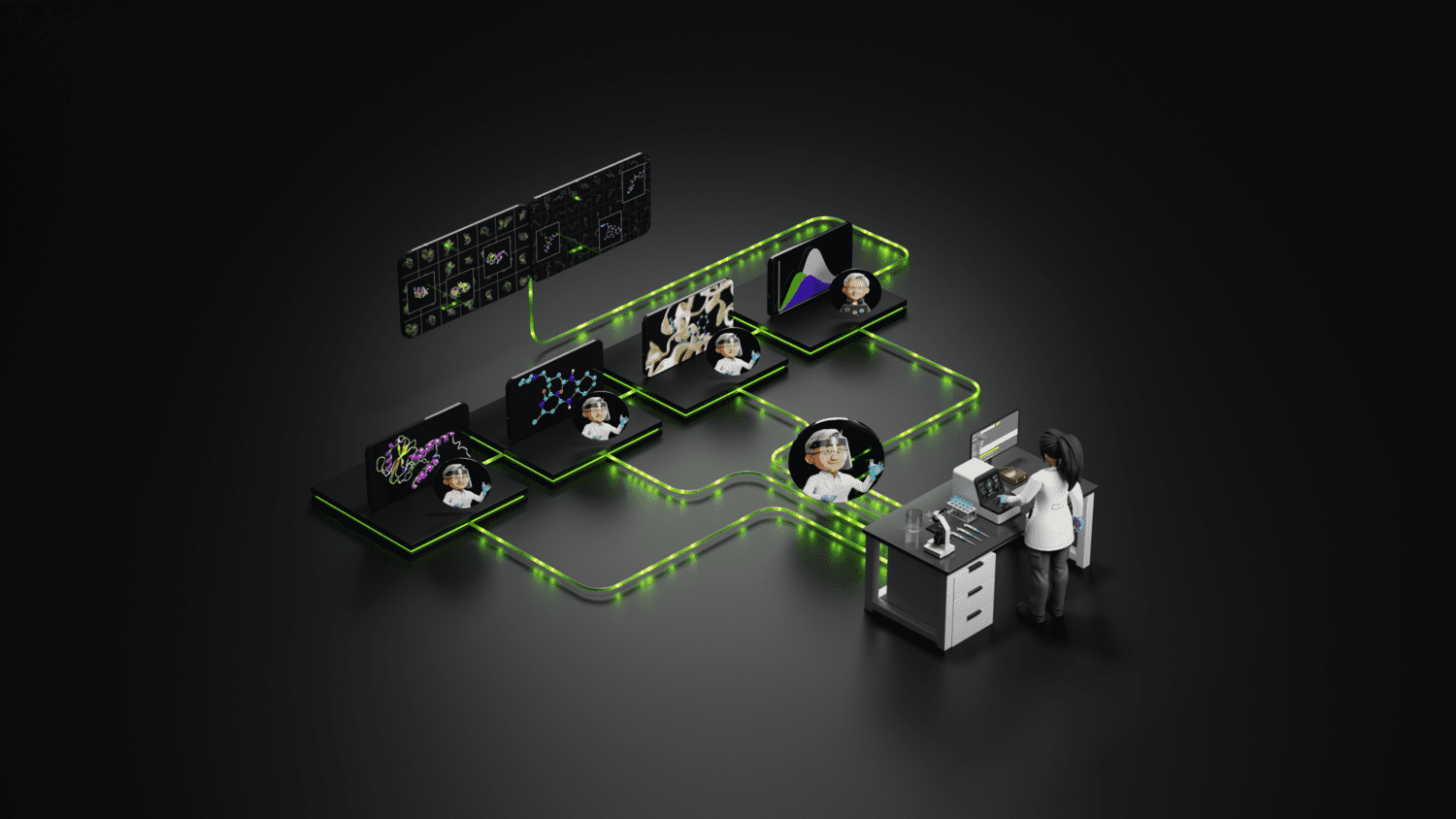
NVIDIA unveiled the BioNeMo Agent Toolkit, a science-reasoning AI suite aimed at turning complex scientific workflows into agent-executable tasks. Rather than handing researchers a bare model, the toolkit orchestrates the surrounding steps — selecting the right model, preparing inputs, running the workflow, and inspecting outputs — letting an agent carry a scientific task end-to-end. It targets domains like drug discovery and computational biology where the bottleneck is often the glue work around models, not the models themselves.
In parallel, NVIDIA said it is working to make humanoid AI robots safer around humans, part of its broader 'physical AI' push. That theme recurred this week with NVIDIA's work accelerating bird's-eye-view (BEV) pooling on GPUs for autonomous vehicles and robotics — projecting sensor data into a unified top-down view faster — underscoring how much of NVIDIA's narrative is shifting from chatbots to embodied and scientific AI.
The competitive context is sharp. Alibaba just unveiled its Qwen Robot Suite explicitly to challenge NVIDIA in robotics and physical AI, and OpenAI's new Jalapeño inference chip threatens NVIDIA's grip on the most lucrative inference workloads. NVIDIA is responding by moving up the stack — toolkits, blueprints, and safety frameworks — to make its hardware the default substrate for science and robotics rather than competing solely on raw silicon.
The open question is adoption: agent toolkits for science live or die on whether real labs trust them with reproducible, auditable workflows, and humanoid-safety work is early. But the strategic message is clear — NVIDIA wants to own the physical-AI and scientific-computing layers as the agentic era widens beyond text.