Alibaba's Qwen3.7-Max ran autonomously for 35 hours optimizing a kernel on a never-before-seen custom chip
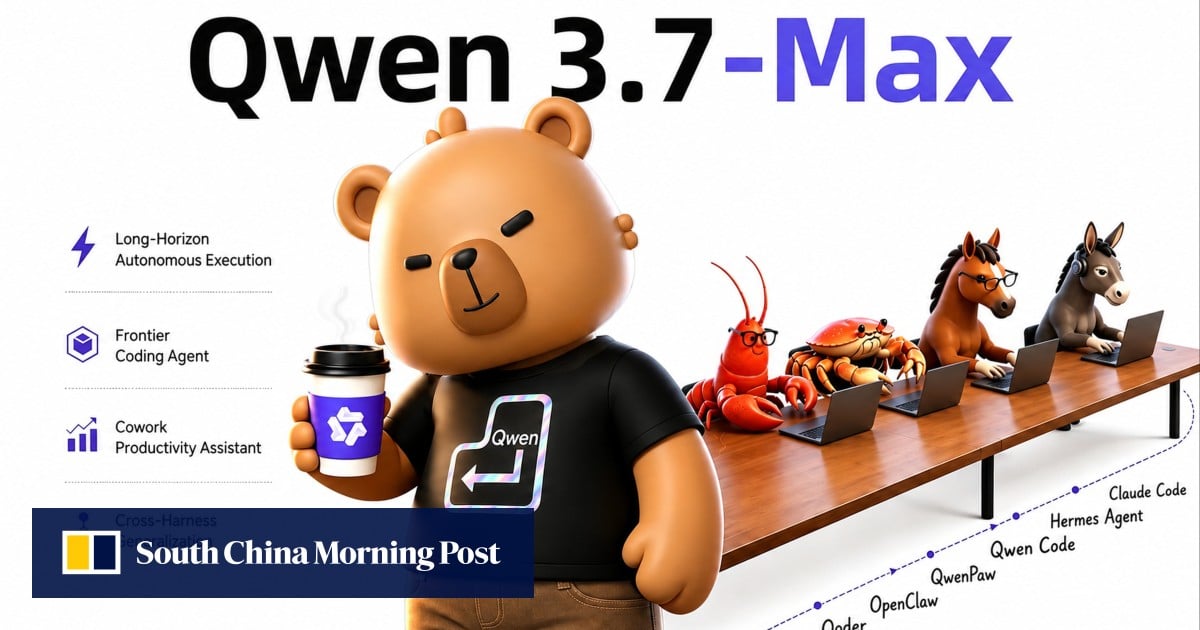
Qwen3.7-Max is Alibaba's clearest bid yet to position itself as China's frontier agentic-AI provider. The headline result — 35 continuous hours of autonomous kernel optimization on a previously-unseen custom chip — is meaningful because it stresses two capabilities at once: long-horizon planning without human intervention, and zero-shot adaptation to novel hardware ISAs.
Mechanically the model offers a 1M-token context window, agent-first tooling (designed around tool use and stateful task execution rather than chat), and is API-only — Alibaba is not open-sourcing this tier. Use cases the company highlights: coding agents for complex multi-repo projects, automating office tasks via external tool integrations, and long-running scientific/engineering optimization loops.
Competitive context: Qwen3.7-Max lands the same week as DeepSeek's permanent V4-Pro price cut, and together they signal that Chinese labs are pushing capability and pricing simultaneously while Western labs (Anthropic, OpenAI) burn frontier dollars on compute rentals. The custom-chip angle also matters geopolitically — successfully running on a non-NVIDIA architecture is part of the broader Chinese effort to route around export controls, and SCMP frames it as Alibaba's bid to become 'China's AI factory.'
What to watch: independent reproduction of the 35-hour run (Alibaba's marketing claims will face scrutiny), pricing relative to Qwen3-Max and DeepSeek V4-Pro, and whether Qwen3.7-Max shows up on international benchmarks like SWE-bench and TerminalBench. If the kernel-optimization result holds up, it's one of the most concrete examples to date of an agent doing genuine engineering work end-to-end.