NVIDIA unveils Cosmos-H-Dreams generative simulator for surgical robotics
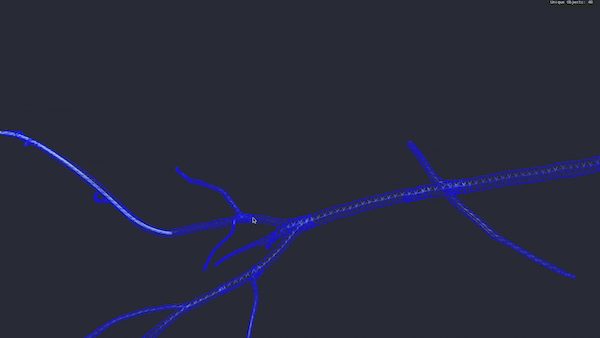
NVIDIA introduced Cosmos-H-Dreams, a real-time, action-conditioned generative simulator built specifically for surgical robotics. Technically, it distills the heavier Cosmos-H-Surgical-Simulator into a causal, few-step student model and serves it via FlashDreams, NVIDIA's accelerated streaming-inference library — the distillation-plus-fast-serving pattern that recurs across the week's efficiency stories. The payoff is that it runs on a single NVIDIA RTX PRO 6000 GPU while providing an interactive environment controllable in real time by either a human operator or a learned policy.
The motivating problem, which NVIDIA spelled out in a companion developer post on GPU-native medical physics simulation, is data scarcity: healthcare robotics 'can't rely on internet-scale data collection or unlimited real-world experimentation.' You cannot let a robot practice surgery on real patients to gather training data, so high-fidelity, physically accurate simulation becomes the only scalable way to develop and safely train surgical and clinical robots.
This sits within a broader NVIDIA robotics push visible this week — Jetson edge compute pitched as making 'robots think, not just move,' demoed with investor Sarah Guo, and NVIDIA's reported investment in SSI (773 upvotes on r/singularity) and talks of a $250B backstop for an OpenAI Ohio data center. NVIDIA is simultaneously supplying training simulation, edge inference hardware, and capital across the AI-robotics stack.
Competitive context: action-conditioned world models for robotics are an emerging frontier (see also academic work like NYU's Patch Policy), and NVIDIA's advantage is owning the GPU that both trains and serves the simulator. What to watch: real surgical-robotics deployments using Cosmos-H-Dreams, validation of the few-step student model's fidelity versus the full simulator, and whether single-GPU serving holds up in clinical settings.