Meta reconsiders its 2030 net-zero pledge after AI buildout lifts emissions 45%
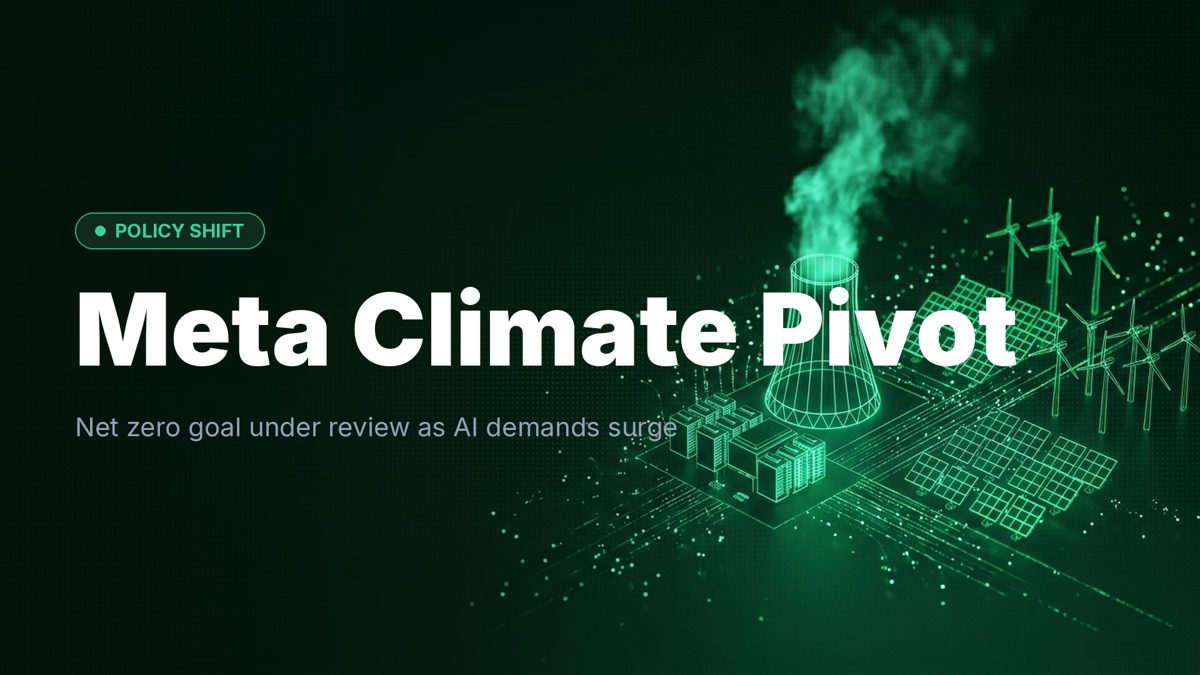
Meta is the first hyperscaler to openly signal that its AI ambitions may outweigh a headline climate pledge. The company is re-evaluating its 2030 net-zero target after emissions rose 45% to 11.8 million metric tons, driven by GPU clusters training its Muse model family.
The arithmetic is simple. Frontier training and inference clusters are now measured in gigawatts, and the electricity has to come from somewhere. Clean power procurement, grid interconnection queues and new generation cannot keep pace with how fast Meta is adding capacity, so the gap gets filled by carbon-emitting power. Leadership's message is that world-class compute capacity is the priority.
The broader industry faces the same tension. Microsoft and Google have both reported rising emissions against their own climate targets, but neither has said as directly that a target is up for revision. Meta's move gives the rest of the sector cover to follow, and it reinforces this week's mood: AI infrastructure is being treated as an existential race in which other commitments yield.
Engineers debating the decision mostly point to physical grid constraints rather than corporate cynicism. Still, watch for reactions from regulators, investors with ESG mandates and the EU, and for whether Meta replaces the pledge with an intensity-based or later-dated target.