Anthropic starts watermarking Claude's text and image outputs for EU AI Act compliance
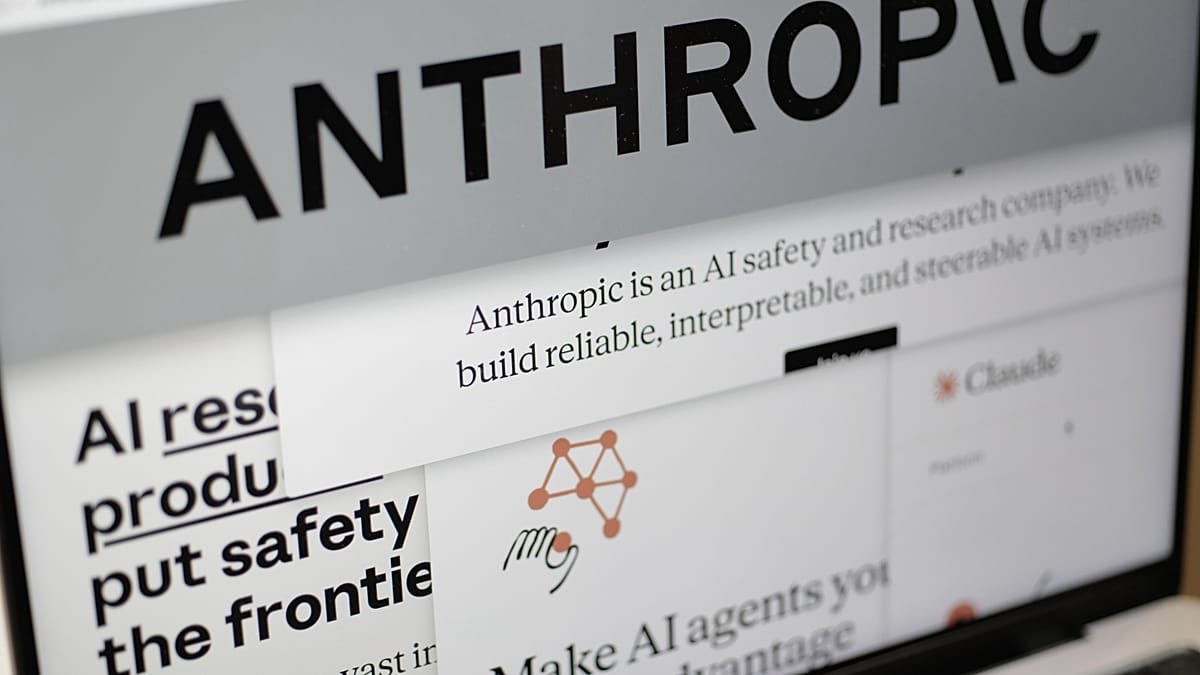
Anthropic has begun adding invisible, machine-readable watermarks to everything Claude writes and generates, a compliance move driven directly by Article 50 of the EU AI Act, which mandates that AI-generated outputs be detectable. The watermarking applies to models launched on or after August 2, 2026, and uses two distinct methods: for text, Claude subtly biases its word choices in a statistically detectable pattern that emerges across a sufficient volume of content; for files and images, it embeds C2PA-standard provenance metadata cryptographically signed to signal Claude's involvement.
Mechanically, the text approach is a form of distributional watermarking — it nudges token probabilities so that a downstream detector, knowing the secret key, can recognize the signature without a human reader noticing any degradation in quality. The C2PA metadata approach is the same content-provenance standard backed by Adobe, Microsoft and others, attaching tamper-evident signatures to files. Anthropic published an FAQ addressing questions and confirmed via its official account that other major model developers who signed the same EU Code of Practice will also implement watermarking.
Competitively, this puts Anthropic among the first frontier labs to ship a production watermarking system tied to concrete regulation, rather than a research demo. It differentiates from vendors who have talked about provenance without shipping. Anthropic plans to release detection tools so users can verify whether content came from Claude.
Skeptics on Hacker News and r/ClaudeAI raised privacy concerns and questioned durability — how well statistical text watermarks survive paraphrasing, editing, or translation, and whether detection can be gamed. Others noted enforcement realities under the EU AI Act remain unclear. Readers should watch whether the detection tools prove robust in practice and whether the word-choice biasing measurably affects output quality, a recurring worry with distributional watermarking schemes.