Microsoft releases Agent Framework Harness for Python and .NET
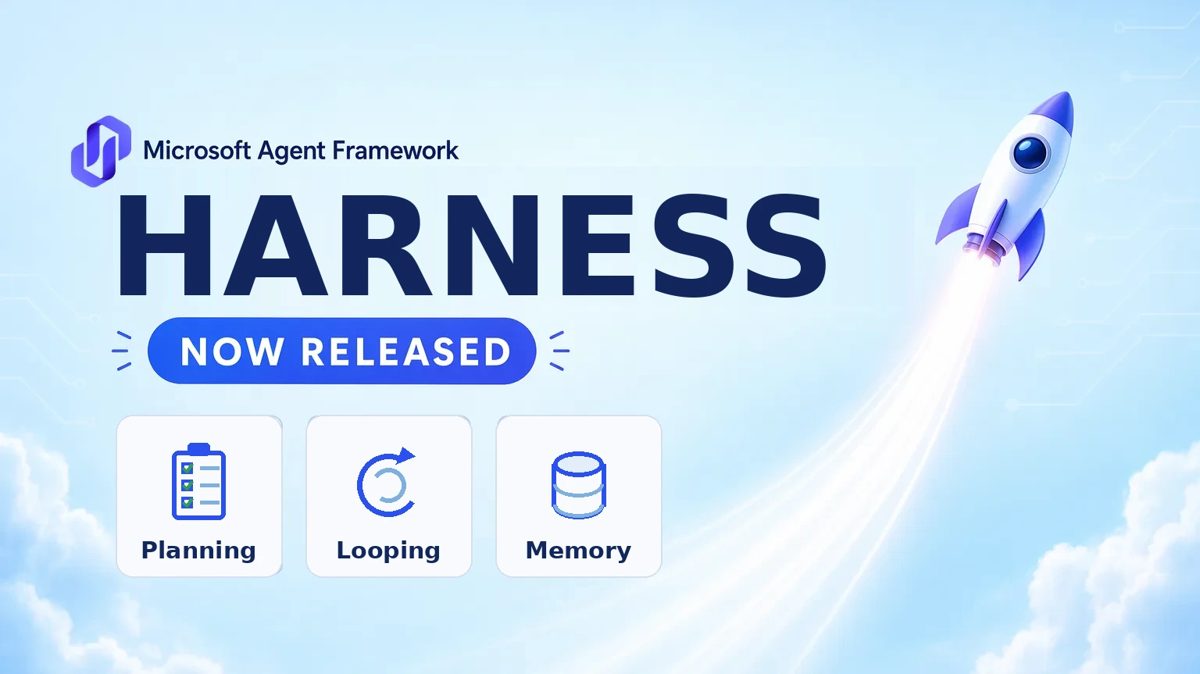
Microsoft shipped the Agent Framework Harness, an opinionated, batteries-included scaffolding designed to convert a raw model into a working agent with minimal glue code. The harness bundles the core agent loop, planning, memory, context management, human-in-the-loop approvals, and telemetry, and ships for both Python and .NET — a deliberate move to serve the large enterprise .NET developer base that competing Python-first agent frameworks under-serve.
Mechanically, the value proposition is standardization: rather than every team hand-rolling retry loops, memory stores, approval gates, and observability, the harness provides stable, instrumented primitives. Built-in telemetry in particular addresses a persistent pain point — agents are hard to debug and monitor in production — and approval hooks target the governance requirements of regulated enterprises.
Competitively, this pits Microsoft against LangChain, LlamaIndex, AWS's Strands/Bedrock AgentCore, and Google's agent tooling, all racing to own the agent-development layer. Microsoft's .NET support is a genuine differentiator given how much enterprise software runs on the stack. The broader context is the week's clear agent-infrastructure theme: AWS touting a new agent deployed on AgentCore every 10 seconds and monday.com running production agents on Bedrock. Skeptics will note the market is crowded and that framework lock-in is a real concern for teams. Watch adoption metrics, whether it integrates cleanly with Foundry and Copilot Studio, and how it compares to Semantic Kernel, Microsoft's prior agent effort.