NVIDIA Ising decoding cuts quantum color-code error rates by over 300X
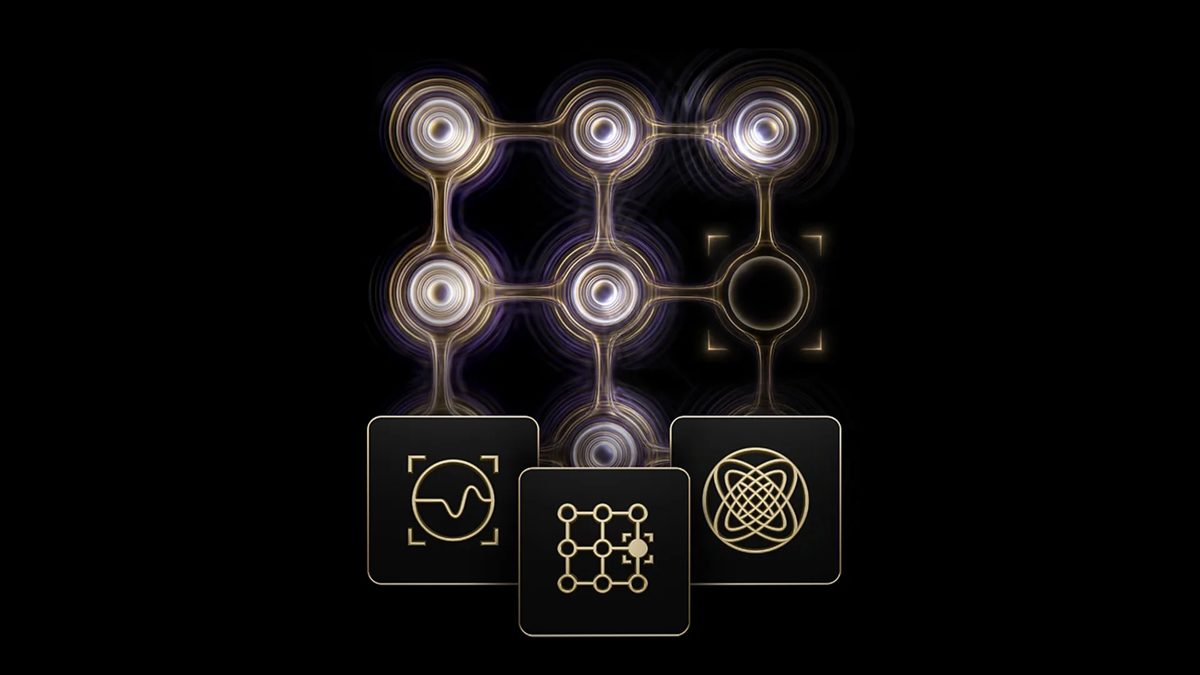
NVIDIA researchers published an Ising-based decoding technique for quantum error correction that reduces logical error rates on color codes by more than 300X — a substantial step toward the fault-tolerant logical operations required for practically useful quantum computers. The work appeared on NVIDIA's developer blog and reflects the company's expanding investment in hybrid quantum-classical computing.
Mechanically, quantum error correction encodes fragile logical qubits across many physical qubits, and a 'decoder' must interpret error-syndrome measurements in real time to correct faults before they cascade. Color codes are attractive because they support a richer set of logical operations than surface codes but are historically harder to decode. Framing the decoding problem as an Ising optimization — the same formalism used in physics for spin systems — lets NVIDIA apply GPU-accelerated solvers to achieve the dramatic error-rate reduction.
Competitively, this positions NVIDIA not just as the AI-compute leader but as an infrastructure player in quantum computing, where GPU-accelerated classical co-processing for decoding and simulation is increasingly central. It complements NVIDIA's CUDA-Q platform and its partnerships with quantum-hardware makers.
Skeptics note that decoder improvements are one piece of a much larger fault-tolerance puzzle — physical qubit quality, scaling and gate fidelity remain gating factors, and a 300X reduction on color codes doesn't by itself deliver a useful quantum computer. Still, real-time high-performance decoding is a recognized bottleneck, so the result is meaningful. Watch for integration into NVIDIA's quantum tooling and independent replication by quantum-hardware groups.