Microsoft adds native cross-session memory to Agent Framework via Cosmos DB
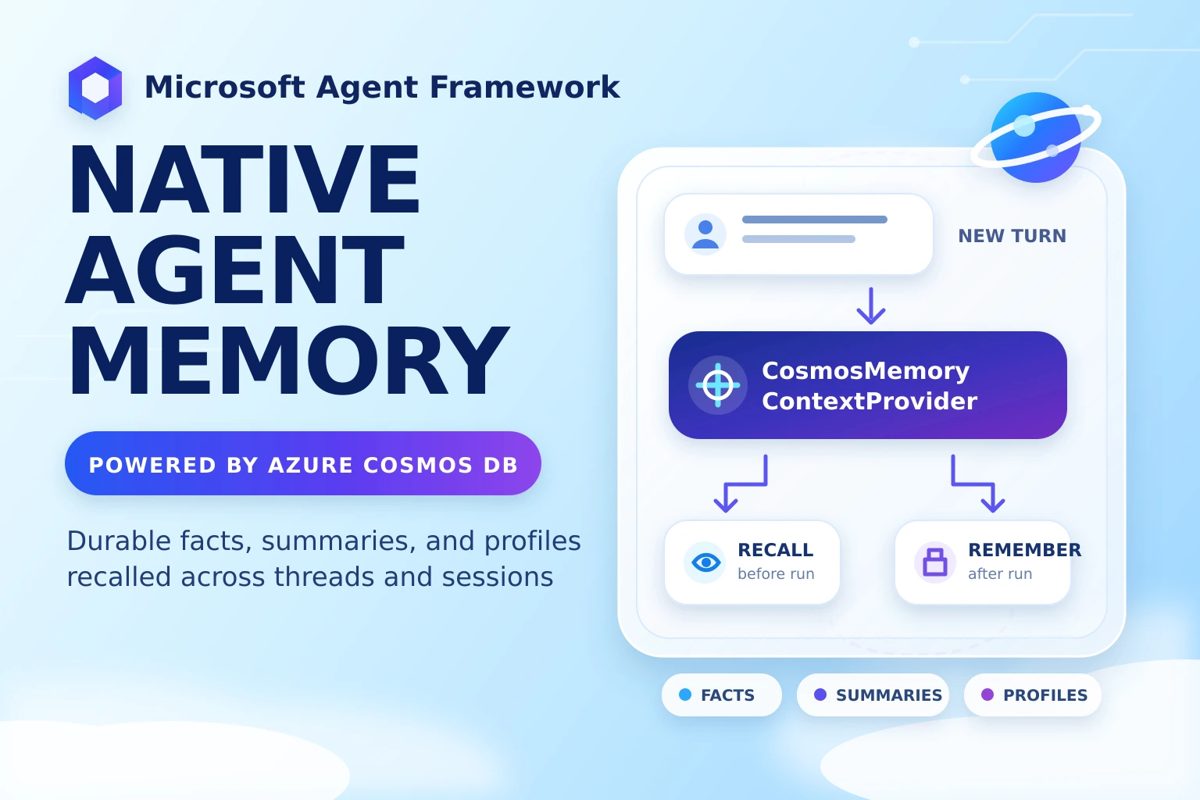
The feature targets a core limitation of production agents: without durable memory, they reconstruct context from scratch each session, degrading continuity and inflating token costs. Microsoft's CosmosMemoryContextProvider hooks into the Agent Framework so developers attach it once and get automatic recall across sessions, with Azure Cosmos DB providing the globally distributed, low-latency backing store.
The timing is telling — persistent agent memory became a cross-vendor theme this exact week. AWS shipped lifecycle policies for AgentCore memory (scoring, consolidating and pruning agent memories on a nightly Step Functions workflow), and NVIDIA detailed building a memory-driven agent with NemoClaw. All three are converging on the same insight: as agents run longer, memory management — not just model capability — becomes the differentiator, and stale or bloated memory creates both quality and compliance risk.
Microsoft's choice to build on Cosmos DB is a classic platform play, steering Agent Framework developers toward its managed database and deepening lock-in within the Azure agentic stack that also includes Foundry and Copilot Studio. It complements Microsoft's broader September Copilot updates — cost-management visibility in Copilot Cowork, shareable custom skills, a rebuilt Notebooks UI and Agent Builder improvements. As a preview, the caveat is production-readiness and pricing at scale; developers will watch how Cosmos DB read/write costs accumulate under heavy agent memory workloads. Watch for GA timing and for whether Microsoft exposes memory portability or keeps it Cosmos-bound.