NVIDIA details DLSS 5 at SIGGRAPH as AMD dismisses CUDA moat
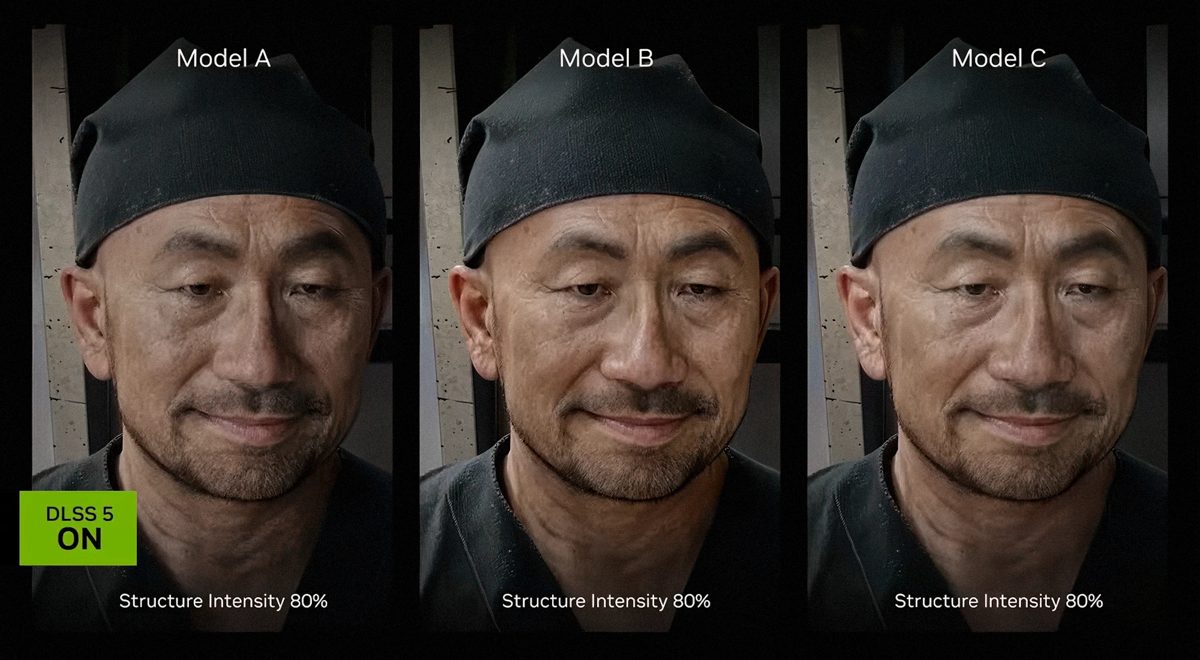
At SIGGRAPH 2026, NVIDIA detailed DLSS 5, the next generation of its neural rendering technology. The headline technical advance is a distilled one-step pixel-space diffusion transformer enabling single-GPU operation, three selectable models with per-object controls, and finer developer control over how rendered game frames are improved. It's a significant step in applying generative diffusion techniques directly to real-time graphics rather than the upscaling-and-frame-generation approach of prior DLSS versions.
The release resonated with the enthusiast community — an r/nvidia thread on DLSS 5's 'three AI models, single-GPU operation and full control' drew 517 upvotes and 375 comments, and the SIGGRAPH keynote thread added more, reflecting genuine developer interest in the per-object control capabilities.
The counter-narrative came from AMD: a VP claimed the company has 'almost zero conversations with customers about CUDA,' arguing that as developers increasingly program at higher levels of abstraction (frameworks, compilers, portable runtimes), NVIDIA's long-vaunted CUDA software moat 'doesn't really matter' and is becoming a 'non-event.' It's a provocative framing given CUDA's role as the foundation of NVIDIA's data-center dominance.
The skeptical read cuts both ways: AMD has strong incentive to downplay CUDA lock-in, and its claim is at odds with the reality that most frontier training still runs on NVIDIA. But the abstraction-layer argument has merit for inference and higher-level agentic workloads where portability matters more. What to watch: whether DLSS 5's diffusion-based approach delivers real quality/latency wins in shipping games, and whether AMD's abstraction thesis translates into actual data-center share gains.