Anthropic adopts EU AI Act code, watermarks Claude output
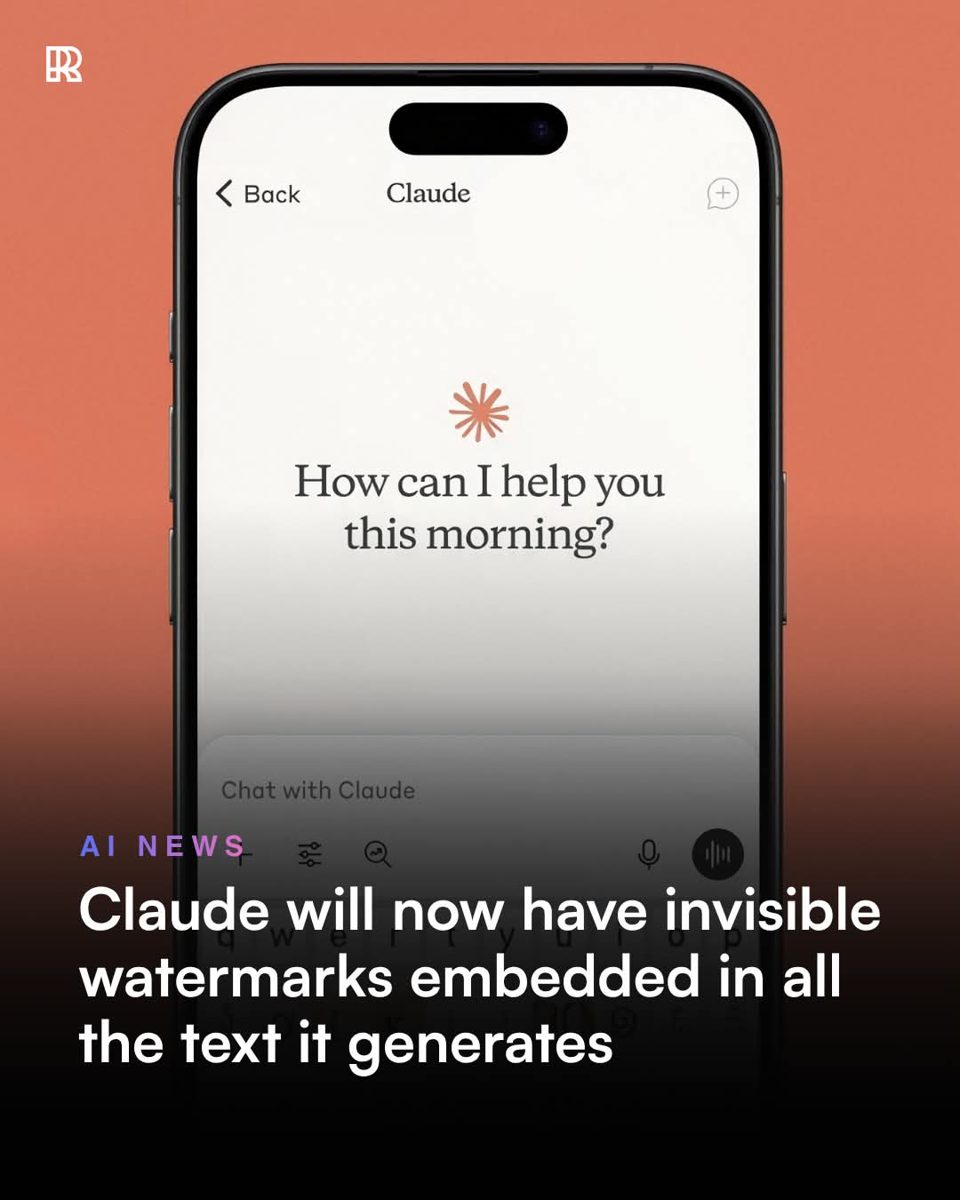
Anthropic committed to the EU AI Act's Article 50(2) Code of Practice, rolling out machine-readable watermarks across all Claude models released from August 2, 2026 onward. Text outputs will carry imperceptible watermarks, while generated image files (.svg, .png, .jpg) will include signed metadata compliant with the C2PA (Coalition for Content Provenance and Authenticity) standard. The change applies across all Claude platforms and cloud partners.
The move makes Anthropic one of the first frontier labs to concretely operationalize the EU AI Act's transparency requirements around AI-generated content. Article 50 mandates that AI-generated or manipulated content be marked in a machine-readable way so downstream systems and platforms can detect synthetic media — a growing regulatory priority as AI content proliferates.
Technically, C2PA signed metadata provides a cryptographically verifiable provenance trail for images, while text watermarking remains a harder, less robust problem — imperceptible text watermarks can often be stripped by paraphrasing or reformatting. That gap is likely to draw scrutiny over how durable the text watermarks actually are.
Competitively, early compliance positions Anthropic favorably with EU regulators and enterprise customers who need provenance guarantees, and pressures rivals (OpenAI, Google, Meta) to follow. Skeptics note that watermarks are only as useful as the ecosystem that reads them, and that text watermarking is notoriously easy to defeat. What to watch: whether other labs adopt C2PA at the same pace, how robust the text watermarks prove in adversarial testing, and whether the EU accepts the implementation as compliant.