NVIDIA co-designs attention for fast interactive long-context inference
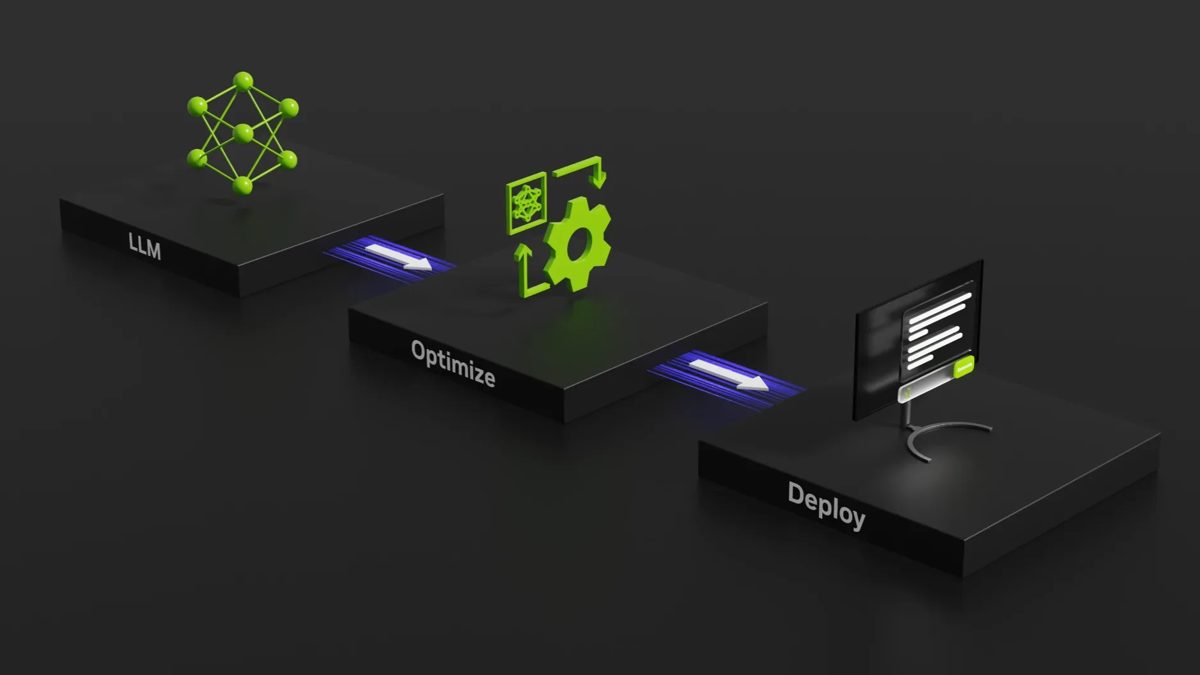
NVIDIA published deep engineering work on co-designing AI model attention for fast, interactive long-context inference. The core insight: as agentic and long-context workloads proliferate — exactly the workloads driving this week's AWS HyperPod disaggregated-inference and agent-framework news — the attention mechanism consumes a growing share of total inference time, becoming the bottleneck. NVIDIA's approach co-designs the model's attention computation with its hardware to keep long-context serving responsive rather than letting latency balloon as context windows grow.
The work is squarely aimed at NVIDIA's platform interest: the more efficiently long-context and agentic inference runs on its GPUs, the stickier its ecosystem becomes. It complements a broader NVIDIA push this week that included guidance on deploying more secure AI agents, self-hosted coding assistants using NeMo Guardrails and the StarCoder2-7B NIM, and a Synthetic Video Detector NIM debuted at SIGGRAPH 2026 to help newsrooms flag deepfakes (though testing showed ~92% accuracy and limited consumer readiness).
Separately, NVIDIA released Video Codec SDK 13.1, adding zero-copy transcode, AV1 B-frames, and frame-accurate seek — targeting high-quality video workloads from streaming to remote collaboration.
The attention co-design work reflects a maturing phase of the AI infrastructure race where marginal efficiency gains in the inference hot path translate directly into cost and latency advantages at scale. With GPU prices reportedly rising up to 30% and community grumbling about $5,000 cards, squeezing more inference throughput per GPU is both a technical and economic imperative. Watch whether these attention optimizations land in NVIDIA's inference libraries and how much real-world speedup long-context agent deployments realize.