NVIDIA runs massive-scale UMAP across multiple GPUs in minutes
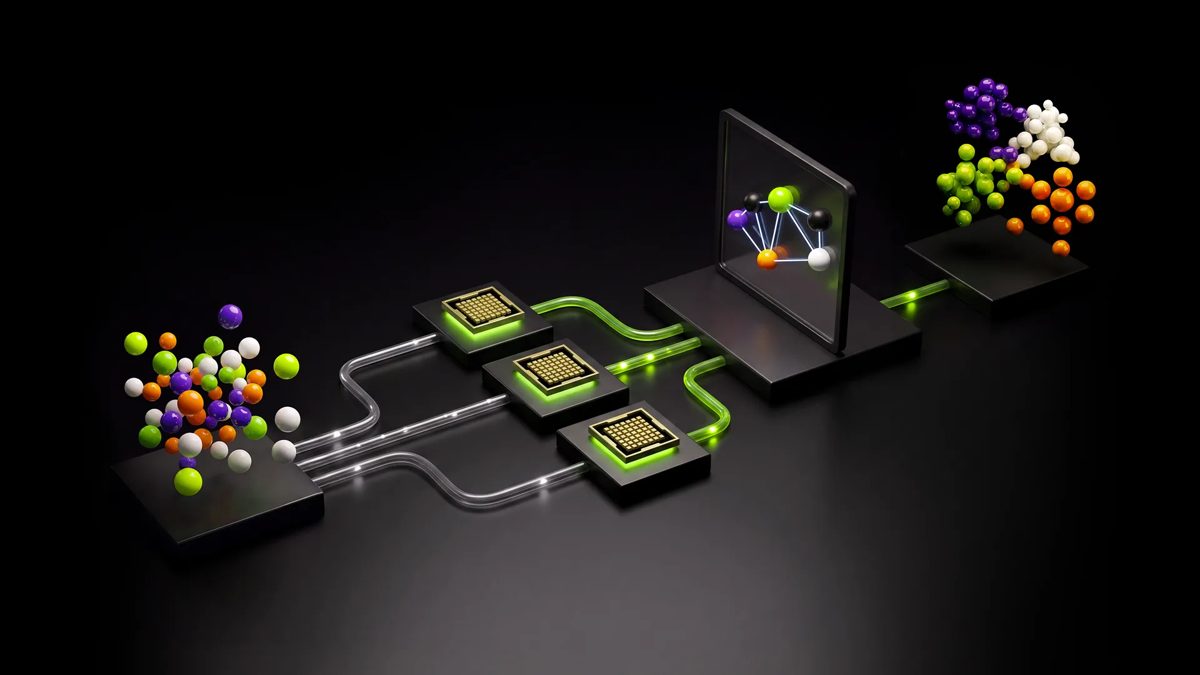
NVIDIA showed how to run UMAP — a widely used dimensionality-reduction technique for visualization and feature extraction — at massive scale across multiple GPUs, completing in minutes what would otherwise take far longer on smaller setups. Crucially, the company says the multi-GPU approach preserves accuracy rather than trading fidelity for speed, addressing a common worry with distributed approximations.
UMAP is a workhorse in data science and ML pipelines, used to project high-dimensional embeddings into interpretable 2D or 3D spaces for exploration, clustering, and quality analysis. As embedding datasets balloon into the hundreds of millions of points — driven by ever-larger models and retrieval corpora — single-GPU or CPU-bound UMAP becomes a bottleneck. Scaling it across GPUs makes interactive analysis of large embedding sets practical.
The release fits NVIDIA's broader week of developer tooling — TensorRT Model Connect for deployment and the ALCHEMI materials toolkit — all reinforcing the CUDA/RAPIDS ecosystem as the default for accelerated data and ML work. By accelerating the analysis stage, NVIDIA further entrenches its hardware at every point in the pipeline, from training to inference to data exploration.
The caveats are narrow: multi-GPU UMAP is a specialist capability most useful to teams already operating at large scale on NVIDIA hardware, and 'preserves accuracy' claims warrant independent verification on real workloads. Watch adoption among the RAPIDS community and whether the technique lands as a turnkey library feature.