Google DeepMind ships Gemini Omni 1.1 Flash with more developer control
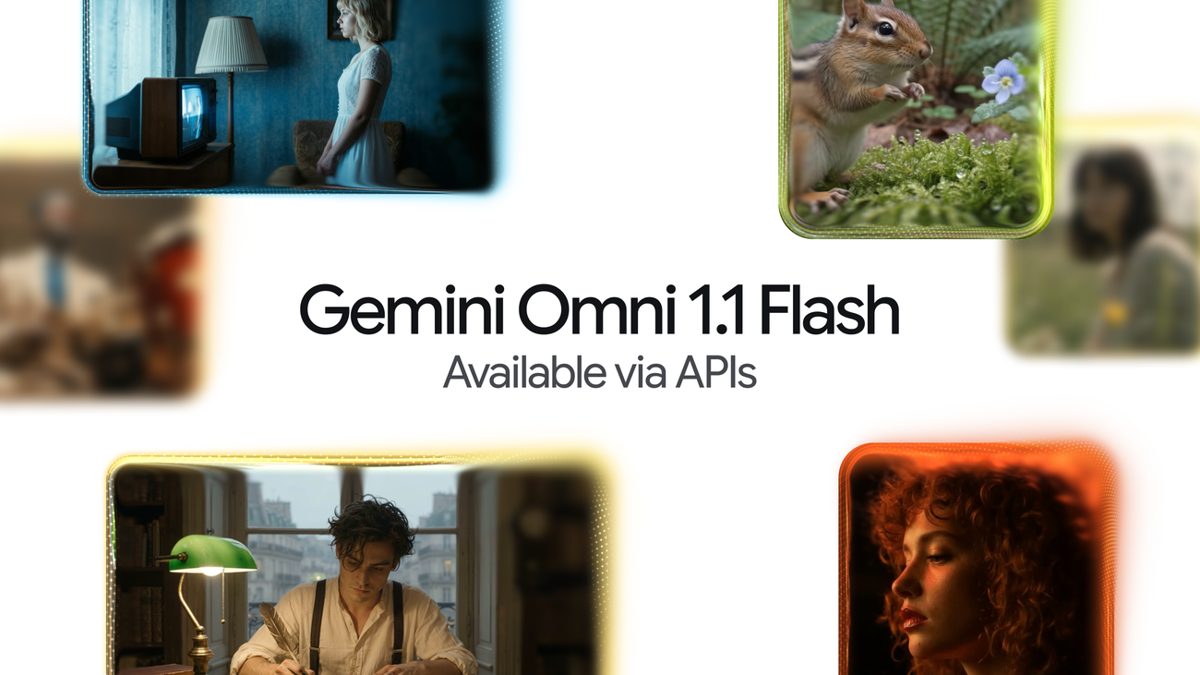
Google DeepMind released Gemini Omni 1.1 Flash, positioning it as its newest multimodal model with a focus on video generation and editing and, notably, more developer control when building applications on top of it. Google DeepMind's account described 'a new suite of creative capabilities,' and the launch drew meaningful developer attention with 194 points on Hacker News.
The 'more control' framing addresses a recurring complaint about generative multimodal models: unpredictable outputs that are hard to steer. By exposing finer-grained controls, Google is targeting production developers who need deterministic, editable results rather than one-shot generations — a requirement for real creative-tooling and agentic pipelines.
The release is part of a dense Gemini cadence that has itself become a story. This week alone saw Gemini Omni 1.1 Flash, internal testing of Gemini 3.8 Flash, Gemini 3.5 Transcribe for speech-to-text, native vLLM TPU support for Qwen3 embeddings, and new AI Mode travel features in Search. That velocity feeds developer 'release fatigue' and branding confusion — critics note Gemini 3.5 Pro remains unreleased while 3.8 Flash tests internally.
Because Google's blog framing emphasizes creative and video capabilities while the ecosystem push emphasizes control, the practical question is which workloads Omni 1.1 Flash actually wins. Watch for pricing, how the editing controls compare to rivals' video models, and whether the rapid version cadence helps or hurts enterprise adoption confidence.