NVIDIA Details Vera Rubin and Blackwell Agentic-AI Performance-Per-Watt Gains
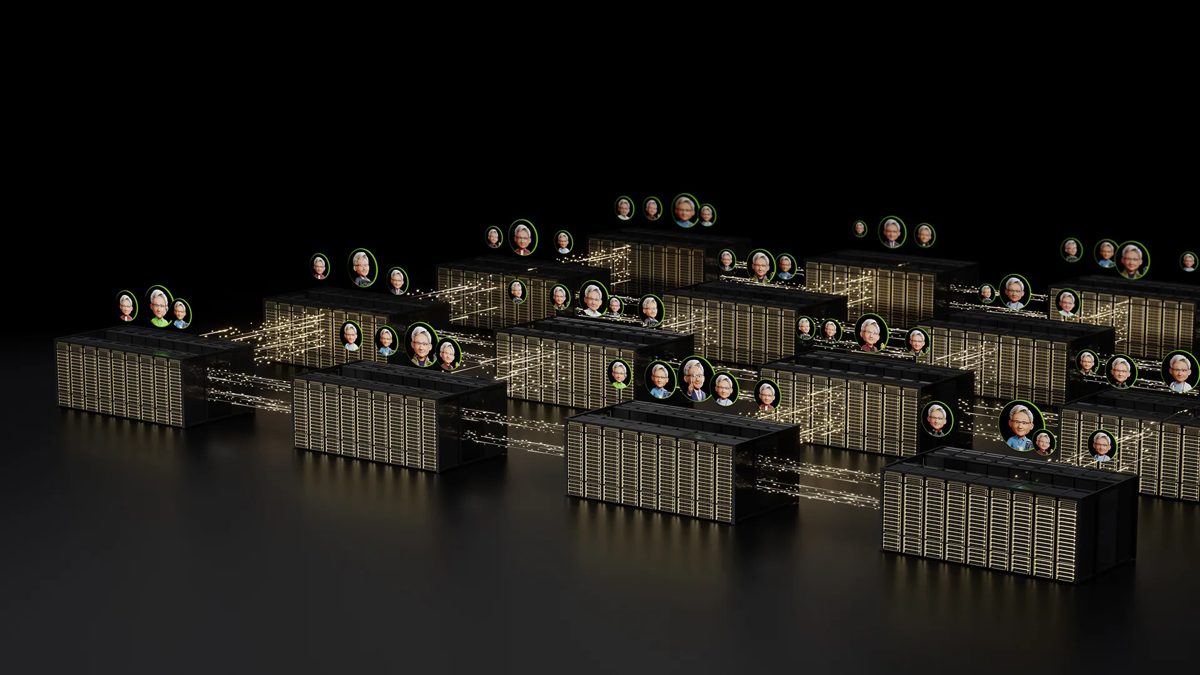
NVIDIA published technical detail on how its Vera Rubin and Blackwell platforms handle the emerging class of multi-step agentic inference workloads—tasks where a model reasons, invokes tools, and coordinates subagents rather than producing a single response. The company frames the key metric as completed agent tasks per watt, arguing that in power-constrained AI factories, efficiency per watt now matters as much as raw throughput.
The positioning reflects a shift in how NVIDIA markets its silicon: as inference workloads move from simple prompt-completion to complex agentic pipelines, the compute profile changes—more tool calls, more orchestration overhead, more variable token generation. NVIDIA argues its platforms are optimized for this pattern, a claim aimed at enterprises building agent fleets.
The agentic-performance message pairs with NVIDIA's concurrent networking announcements—Spectrum-X Ethernet, which it says rewrites data-center design rules for giga-scale AI, and BlueField-4 for scale-in network infrastructure. Together they sketch a full-stack pitch: accelerators, networking, and DPUs co-designed for agentic AI factories, defending NVIDIA's position as custom silicon from Google, Amazon, and Meta encroaches on specialized workloads.
Performance-per-watt framing also responds to the power-constraint reality dominating the buildout—the same constraint driving NVIDIA's $105B Ohio data-center lease guarantee and $500B financing platform. As data centers hit grid limits, efficiency becomes a genuine differentiator, not just marketing. Readers should watch independent efficiency benchmarks on real agentic workloads, how Vera Rubin ships against schedule, and whether custom-silicon competitors match NVIDIA's per-watt claims for agentic inference.