Samsung Unveils zHBM for 10x Faster AI Responses and Hires Stanford's Niebles
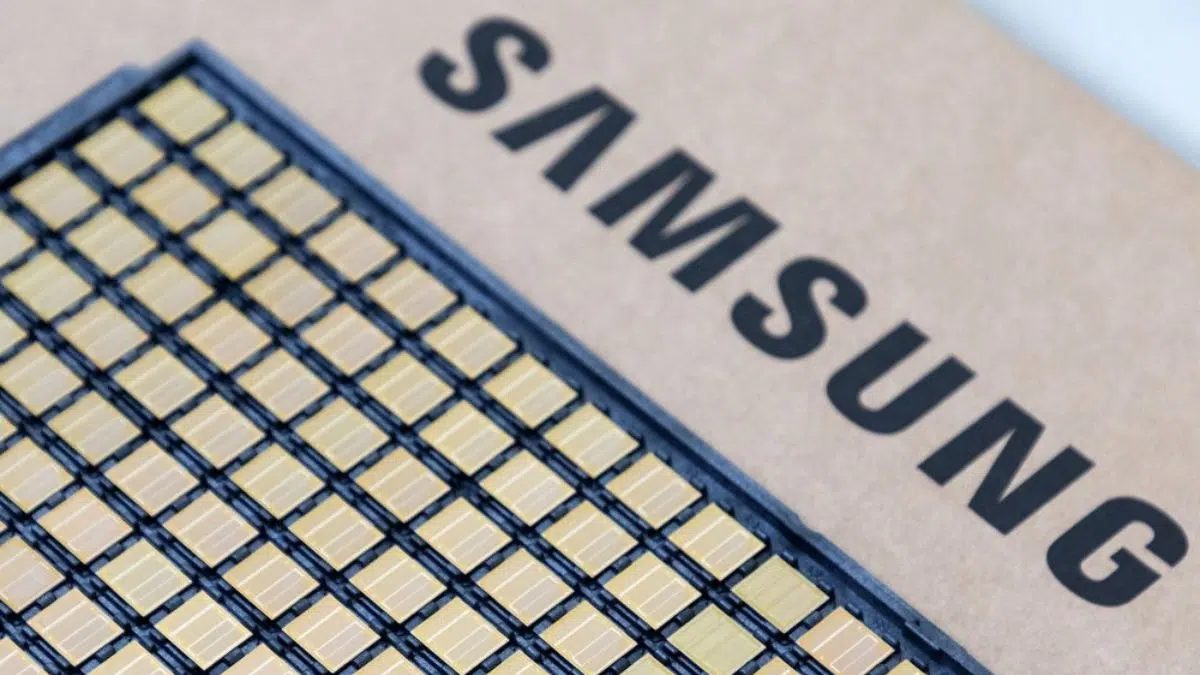
Samsung's zHBM is a bid to attack the memory-bandwidth wall that throttles inference latency. By placing high-bandwidth memory in a 3D stack directly above the AI accelerator rather than beside it, Samsung claims it can push per-user conversational throughput roughly 10x — from about 100 tokens per second to 1,000 — a step change that would materially improve the feel of real-time agents and voice systems.
The mechanism targets the data-movement bottleneck: co-locating memory and compute shortens the physical path and widens effective bandwidth, which matters most for the token-by-token decode phase of LLM inference where memory access dominates. If the numbers hold, zHBM positions Samsung not just as a memory supplier but as an architecture partner in the inference stack.
The timing is pointed. NVIDIA's Huang the same day forecast chip sales doubling, and memory is the constraint on how much of that compute is actually usable. zHBM is Samsung's play to capture value as inference scales, competing with SK Hynix and Micron on next-gen HBM while differentiating on architecture rather than raw capacity. The Niebles hire — a respected computer-vision academic from Stanford — signals Samsung wants credibility in AI research, not only components, as it builds out its North America AI Center.
Caveats: zHBM is a forum unveiling, not a shipping product, and 10x claims from thermal-constrained 3D stacks invite skepticism on yield, heat dissipation and real-world token rates under load. Watch for a productization timeline and independent latency benchmarks, plus whether accelerator vendors commit to designing around it.