Apple launches Health AI Study app with OpenEvidence for 200,000 US testers
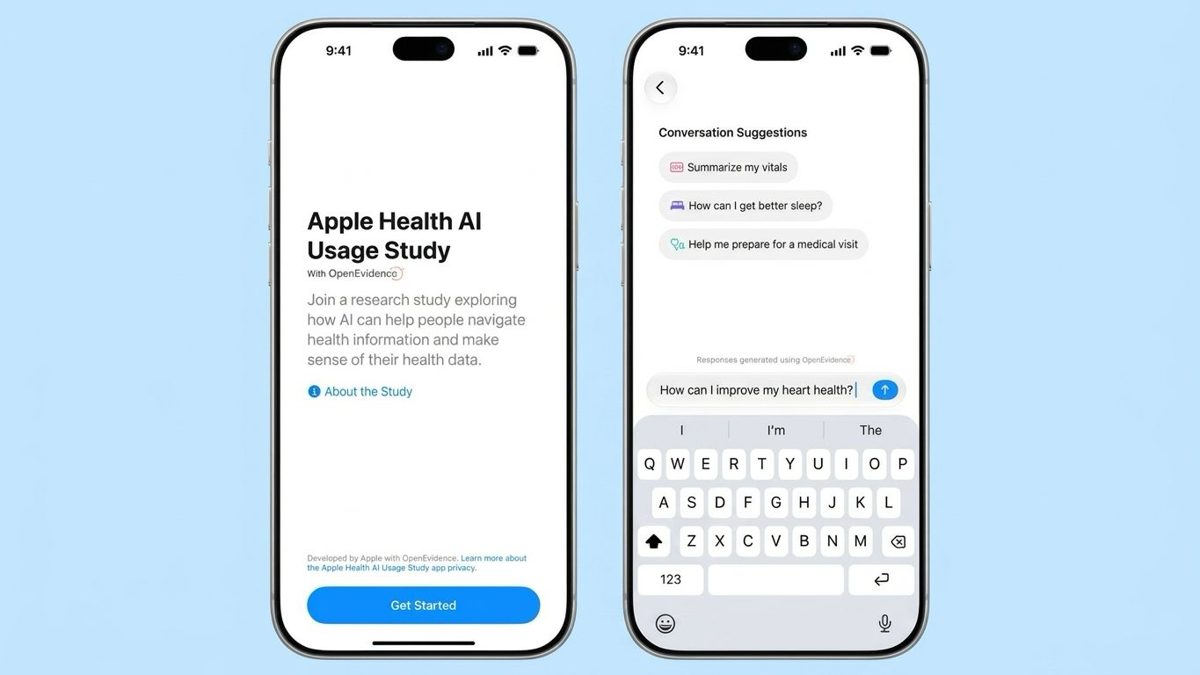
Apple is entering consumer medical Q&A carefully. It frames the product as a study rather than a product, uses OpenEvidence's citation-backed clinical answers, and promises no training on responses. The privacy-first framing contrasts with general chatbots that answer health questions without sourcing.
The study design lets Apple gather real-world evidence on accuracy and safety before any wider launch, and possibly build a regulatory record. Limiting it to adults and the US reflects liability caution.
This fits a broader AI health push. OpenAI and Google have both expanded health features, and AWS this week previewed medical coding in Connect Health. Apple's advantage is its installed base and existing HealthKit data, although the study does not say whether personal health data is used to shape answers.
Watch for findings on accuracy, how Apple handles emergencies and dangerous advice, and whether the feature reaches iOS more broadly in 2027.