Microsoft positions Azure AI Foundry as vendor-agnostic multi-model agent platform at Build
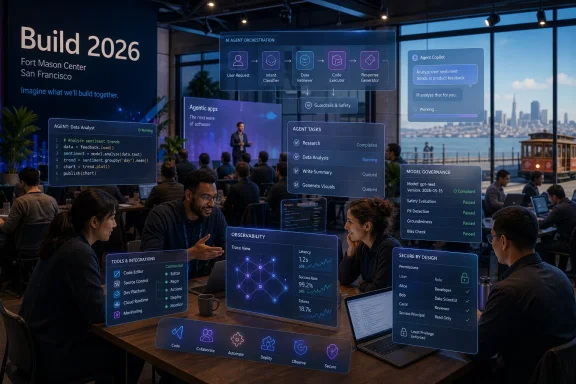
Microsoft framed Build 2026 around Azure AI Foundry as a vendor-agnostic control plane: developers pick from OpenAI, Anthropic, Mistral, DeepSeek and Microsoft's own new MAI models, while deployment, governance and billing stay unified inside Azure. The pitch is reducing lock-in at the model layer while deepening lock-in at the platform layer — a classic cloud strategy applied to the AI era.
The agentic theme ran throughout. Microsoft is repositioning Windows as an 'AI agent host,' expanding GitHub Copilot (now reportedly a desktop app capable of running agents in parallel), and — per Fortune — readying a Copilot 'super app' that merges its various Copilot assistants into a single interface. A separate Copilot Health effort connects wearables and wellness apps, starting with Apple Health and records from 50,000+ US provider organizations. Nadella also tied the platform to NVIDIA's RTX Spark for 'unmetered intelligence to every home and desk,' with Jensen Huang joining live from Taiwan.
Competitively, Foundry is Microsoft's answer to AWS Bedrock — which just added OpenAI's GPT-5.5 and Claude Opus 4.8 — and to Google's Vertex. Offering rivals' models inside your own governance perimeter is now table stakes for hyperscalers.
Not everything landed well. GitHub Copilot's shift from a flat monthly subscription to a usage-based billing model drew vocal developer dissatisfaction, with many calling it the end of Copilot's 'golden age.' Engineers on WindowsForum largely praised the agent-host direction and multi-vendor flexibility, but the pricing change is a reminder that platform power cuts both ways. Watch whether the super-app consolidation simplifies or muddles Microsoft's sprawling Copilot lineup.