DeepSeek orders 160,000 Huawei chips for Inner Mongolia data center
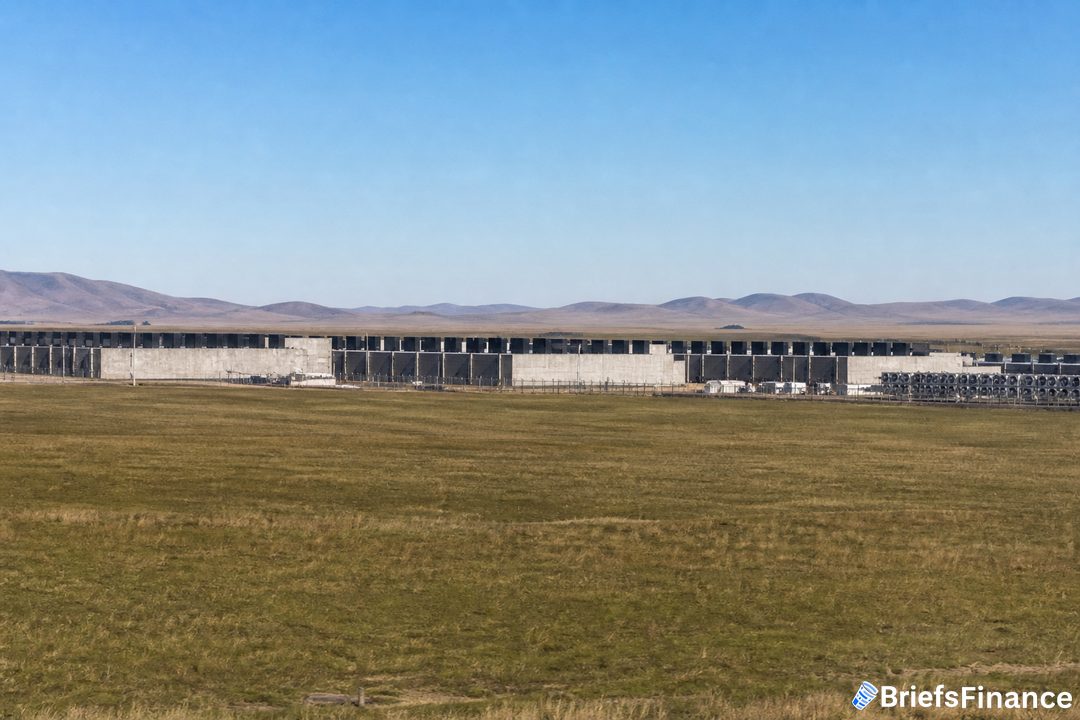
DeepSeek's reported order of at least 160,000 Huawei Ascend accelerators for a new Inner Mongolia data center is a significant marker in China's push to build frontier-scale AI on domestic silicon despite U.S. export controls. For a lab that made its name on efficiency-first, disruptive open-source releases (dating to DeepSeek R1), committing to a large Ascend fleet signals confidence that Huawei's accelerators are now viable at frontier training and inference scale — a claim China-watchers have long anticipated and skeptics have doubted on software-stack maturity and yield.
The compute buildout accompanies DeepSeek's V4 model family: V4-Pro at 1.6 trillion parameters (49 billion active) and V4-Flash at 284 billion total (13 billion active), both featuring a 1-million-token context window. DeepSeek says a V4-Pro-Max variant scores 80.6% on SWE-bench Verified, a strong agentic-coding result that would place it competitively against Western frontier models on that benchmark. Founder Liang Wenfeng continues to steer the lab toward open releases that pressure incumbents on price.
Strategically, the move matters beyond one lab: it validates a domestic hardware-plus-open-model stack that reduces reliance on Nvidia at a moment when Nvidia is doubling down on the open ecosystem via its Hugging Face acquisition. If Ascend-trained frontier models hold up on independent benchmarks, it accelerates a bifurcation of the global AI supply chain. Caveats abound — the order is reported, not confirmed by DeepSeek; SWE-bench numbers are self-reported; and Ascend software tooling still trails CUDA. But the direction of travel — 160K accelerators, trillion-parameter models, million-token context — is unmistakable.