Cursor Composer 2.5 matches Opus 4.7 and GPT-5.5 at a fraction of the cost
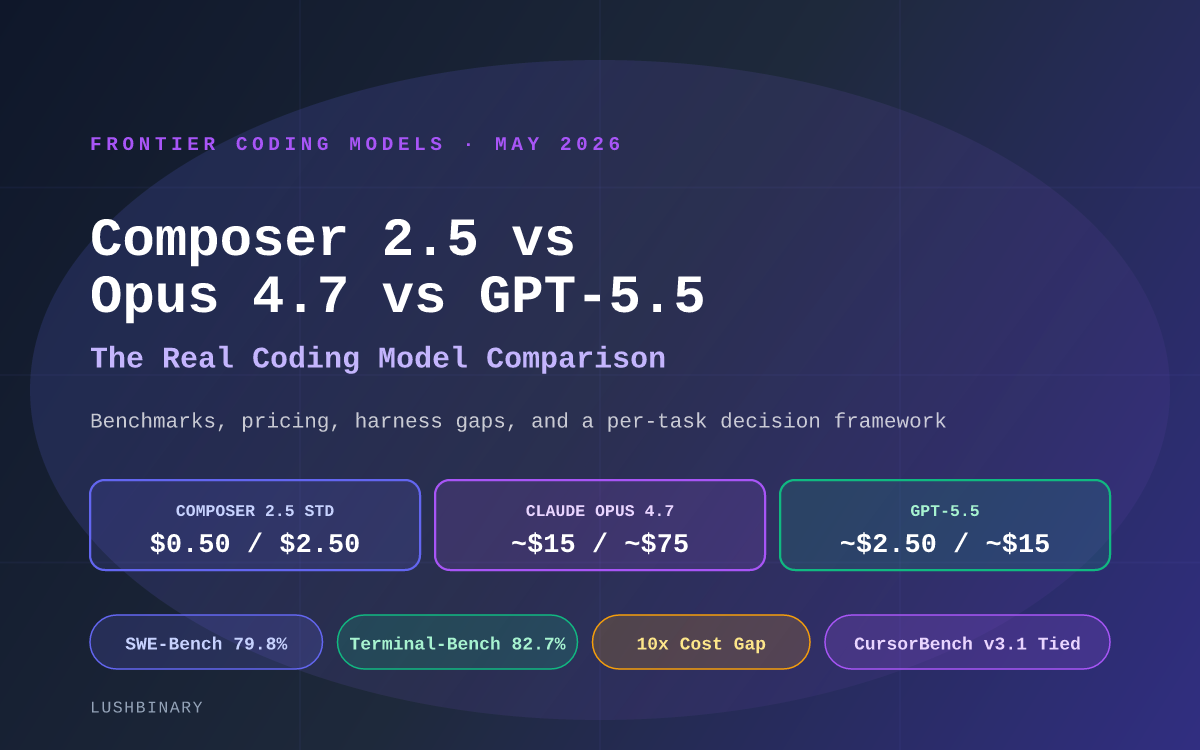
Composer 2.5 is the most prominent demonstration to date that a strong open-weights base (Kimi K2.5) plus aggressive synthetic-task post-training can reach frontier-equivalent coding performance. The 25x synthetic-task scale-up is the methodological story — Cursor is effectively running a distillation/RL pipeline at a scale typically associated with frontier labs.
For Cursor's product strategy, this resolves the existential question: 'can a code editor build its own model competitive with the labs it depends on?' The answer for coding-specific tasks appears to be yes. The economic implication is significant — Cursor can route most user requests through Composer at internal cost, reserving Claude/GPT calls for edge cases, dramatically compressing its COGS.
The competitive shockwave is for Anthropic and OpenAI, not Cursor's open-source peers. Both labs price their coding-tier models as flagship-margin products; if Composer-class models commoditize that performance band, frontier coding revenue compresses. Anthropic's Stainless acquisition and Claude Code investment look defensive in this light; OpenAI's Codex-deep GPT-5 enterprise tier does too.
Skeptical take from HN: benchmark cherry-picking concerns and the perennial question of whether 'matches on SWE-bench' translates to actual day-to-day developer preference. Cursor's user-retention data over the next 60 days is the real signal. Several developers already porting Kimi-based stacks to Ollama within hours of release.