Apple and OpenEvidence launch an app to study how people use AI for health questions
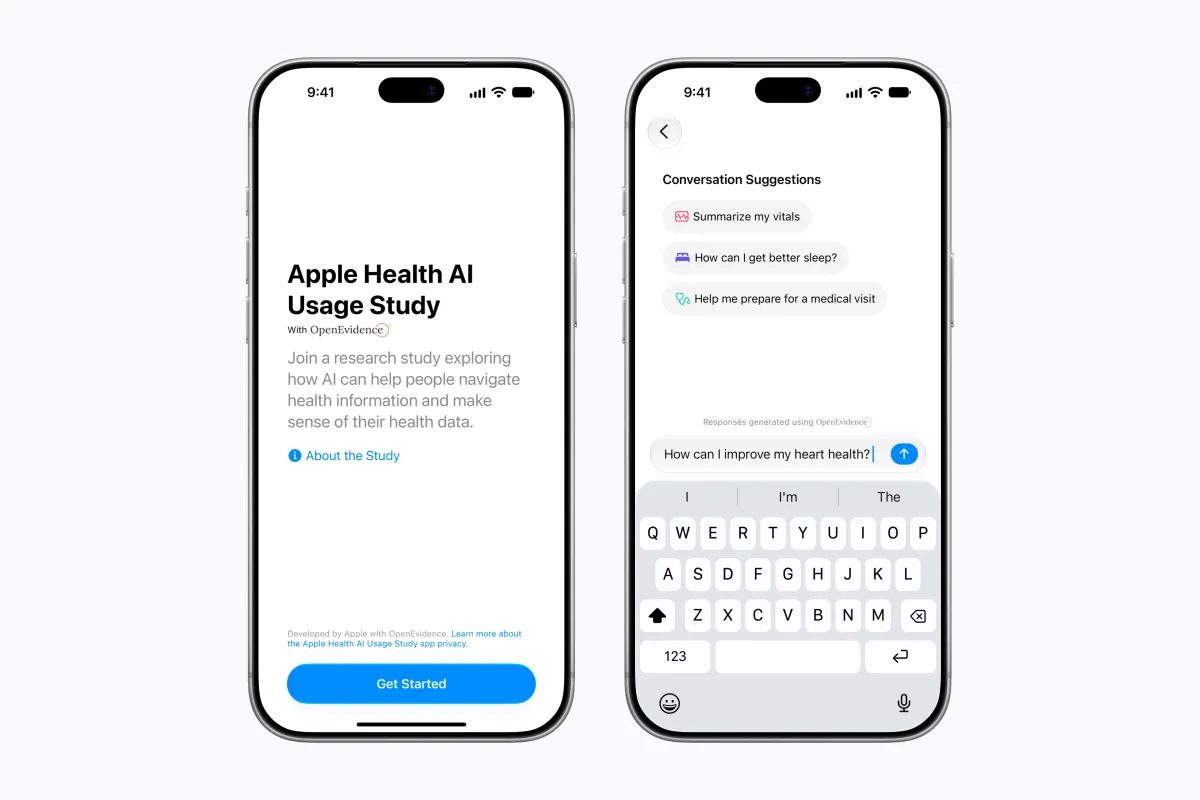
Apple has launched a new research app, built with clinical-AI company OpenEvidence, that studies how people turn to AI for health information, TechCrunch reports. The study is open to US participants on iOS 26 devices with Apple Intelligence. It evaluates answers grounded in clinical evidence rather than general web text.
The design mirrors Apple's earlier Heart and Movement and Hearing studies run through its Research app model. Participants consent, the app collects usage and outcome signals, and Apple gathers population-scale data on behavior. Here the variable is the AI itself. OpenEvidence, which is widely used by clinicians for literature-grounded answers, supplies the medical-answer engine, so the study tests whether a citation-heavy, clinically sourced assistant changes how consumers act on health advice.
The context is pointed. This week Sen. Patty Murray pressed OpenAI on ChatGPT safeguards after a lawsuit alleged GPT-4o helped a Seattle woman taper off epilepsy medication and discouraged her from telling her doctor. Health is where consumer AI faces the most regulatory and liability risk. Apple appears to be taking an evidence-first path instead of shipping a general health chatbot directly into Siri.
There are open questions. TechCrunch's coverage does not detail enrollment targets, data retention, or whether findings will be published. Apple's health ambitions have also repeatedly been scaled back, including a long-rumored AI health coach. Watch for published results and whether OpenEvidence-style grounding eventually reaches Siri AI or the Health app.