Microsoft unveils Maia 300, scales its custom silicon to multi-gigawatt inference from 2027
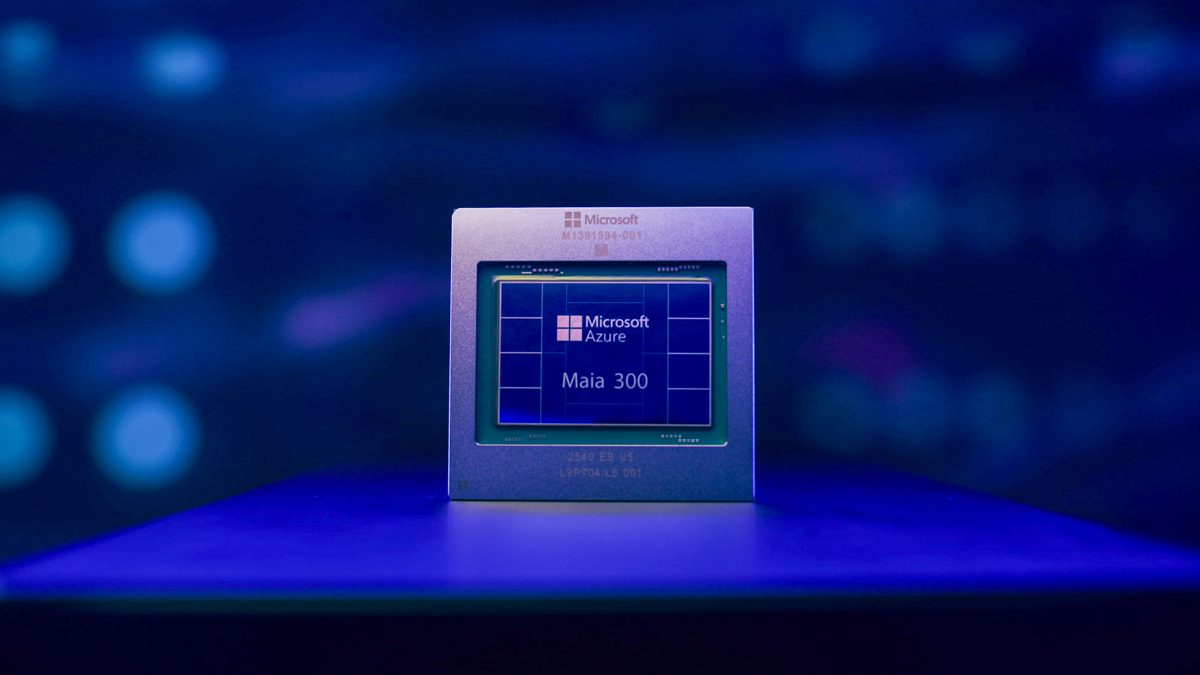
Satya Nadella called the announcement 'our biggest bet yet on our own silicon.' Maia 300 targets long-context reasoning and multi-step agent workloads, where Microsoft says the chip's efficiency advantage is largest. Nadella said Maia 200 already delivers up to 1.7x more tokens per watt across Teams and Copilot experiences.
The rollout is aggressive. Maia 200 is in production now. GitHub Copilot and Microsoft Foundry migrate by year-end. From 2027 the Maia fleet scales to multi-gigawatt deployments and becomes the default inference platform for Microsoft's own products. Evercore ISI estimates Maia will eventually account for about 10% of Microsoft's AI compute.
Competitively, Microsoft is joining Google (TPU) and AWS (Trainium/Inferentia) in vertically integrating inference to escape Nvidia margins. Combined with Claude entering Copilot and the Qwen-based Decision-1 model, the week reads as Microsoft systematically reducing its dependence on any single supplier, whether of chips or of models.
The catch: Maia chips will not be rentable by third parties. Developers therefore cannot independently test Microsoft's efficiency claims the way they can benchmark GPU cloud instances.