NVIDIA Introduces DSX MaxLPS to Reclaim Stranded AI-Factory Power
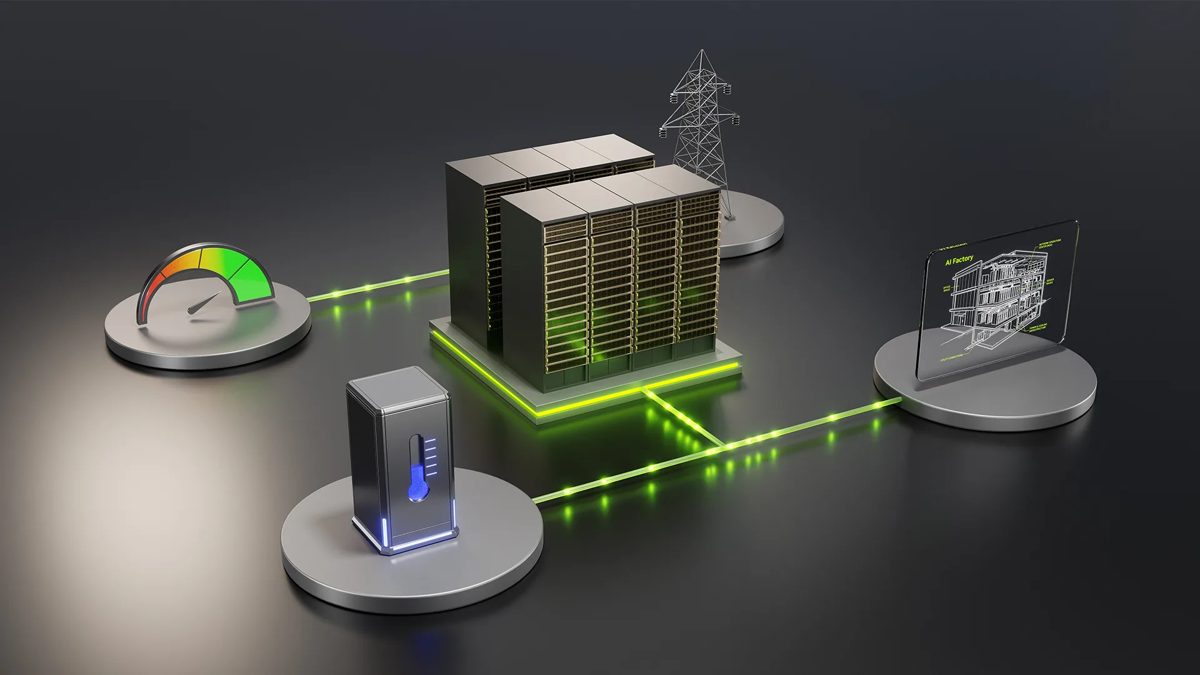
NVIDIA has introduced DSX MaxLPS, a technology aimed squarely at the industry's tightest bottleneck: power. AI factories are typically provisioned for peak simultaneous GPU load—the worst-case moment when every accelerator draws maximum power at once. In practice that peak rarely occurs, leaving significant capacity 'stranded' as headroom. DSX MaxLPS reclaims that unused power, treating every idle watt as recoverable capacity to drive more throughput from the same electrical envelope.
The mechanism matters because, increasingly, AI data centers are power-limited rather than chip-limited—operators can buy GPUs faster than they can secure megawatts to run them. By dynamically reallocating power headroom to active workloads, MaxLPS effectively increases the useful compute per watt of provisioned capacity, a direct lever on both throughput and total cost of ownership.
The timing dovetails with the week's power-wall narrative from multiple angles: xAI's 1.44M-GPU cluster depends on a ~1.2GW power plant, Google's Project Suncatcher escapes the grid to orbit, and Microsoft added 88 data centers in a quarter. Everyone is racing the same constraint, and NVIDIA—whose GPUs demand is described as so 'extreme' that even weak infrastructure attracts customers—benefits by helping operators squeeze more out of existing deployments, keeping its chips the center of the AI factory.
For operators, the practical question is how much real capacity MaxLPS unlocks in production versus benchmark conditions, and whether aggressive power reclamation risks thermal or reliability tradeoffs. But as a strategic signal, it confirms NVIDIA is expanding from selling chips to optimizing the entire factory around them—a moat that compounds its hardware dominance.