Mistral enters physical AI with Robostral Navigate, an 8B robotics model
Robostral Navigate is Mistral's debut in physical AI, and its pitch is radical simplicity: an 8B model that enables autonomous robot navigation from a single standard color camera plus natural-language instructions — no LIDAR, no depth sensors, no multi-camera rig. On the R2R-CE (Room-to-Room Continuous Environment) benchmark it scores 76.6%, which Mistral frames as strong given its efficiency and minimal sensor requirements.
The technical approach maps plain-language goals ('go to the kitchen and stop at the sink') onto visual navigation policies, letting robots interpret and traverse unfamiliar spaces. Keeping the model at 8B parameters is deliberate — it's small enough for on-robot or edge deployment, aligning with the week's cost-and-efficiency theme rather than the frontier-scale race.
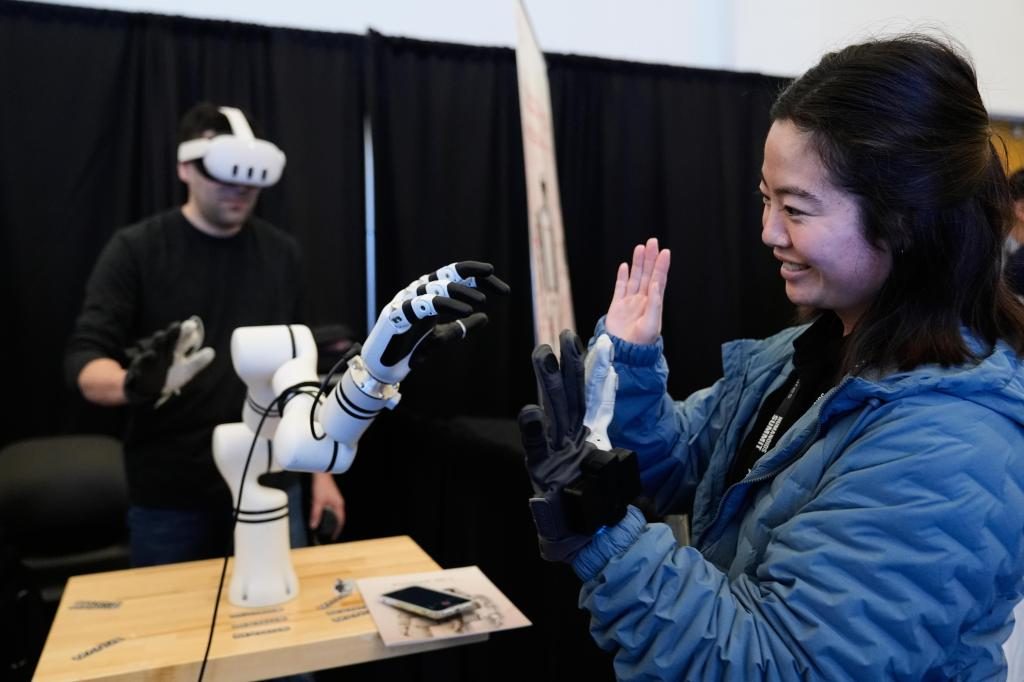
The move follows Mistral's May acquisition of Austria's Emmi AI and signals a strategic push into industrial automation and embodied AI, a lane increasingly crowded by NVIDIA (which this week published a framework for evaluating general-purpose robot policies) and startups like 1X, whose new NEO robotics hands were the top humanoid-robotics discussion of the day on r/singularity (1,971 upvotes). For a European lab often cast as the underdog to OpenAI and Anthropic, robotics is a differentiated bet that sidesteps the crowded chat-model market. Skeptics will note that benchmark navigation scores rarely survive contact with messy real-world environments, and single-camera navigation trades robustness for cost. The open question is whether Mistral can convert a research model into deployed industrial systems, and whether 'physical AI' becomes its lasting identity or a one-off.