NVIDIA details Cosmos Framework and Cosmos NIM with 2-3x faster world-model inference
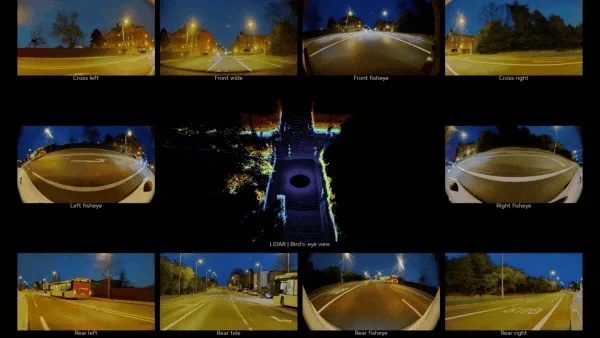
NVIDIA published implementation guides for the Cosmos Framework, its modular open tooling for training, reinforcement learning, optimization and inference of physical-AI world models. It covers models including Cosmos 3, Alpamayo for autonomous driving, GR00T for humanoid robots, Qwen and pi0.5.
The guides target two problems: adapting Cosmos models to a team's own sensors, tasks and data, and deploying those models into interactive simulators. RL post-training supports DPO, GRPO and PPO. Cosmos NIM packages models in optimized containers using quantization, caching and KV-cache-aware routing. NVIDIA reports mean speedups of about 2-3x from speculative decoding, across configurations needing 31 GiB to 150 GiB of VRAM.
World models are NVIDIA's bet beyond language models, competing with Google DeepMind's Genie line and robotics-focused labs. Bundling models, training recipes and inference containers keeps physical-AI developers on NVIDIA hardware.
The caveat is that the speedups are vendor-measured. The VRAM requirements also mean the larger configurations need data-center GPUs.